In the volatile world of cryptocurrencies, memecoins have captured widespread attention for their rapid price swings driven by hype, social media buzz, and community fervor. However, not all memecoins are created equal. Some follow a classic “pump and dump” trajectory, where prices skyrocket temporarily before crashing, often leaving late investors with significant losses. Others, like those with built-in utility, demonstrate more sustained strength, supported by real-world applications and long-term value propositions. This article compares a typical pump-and-dump memecoin chart—using the infamous Squid Game (SQUID) token as an example—with the chart of Memelinked (MK), a meme-linked coin that exhibits chart strength, incorporates utility through its social networking platform, and features an upcoming network marketing app to enhance user engagement and project promotion.
Understanding Pump and Dump in Memecoins
A pump-and-dump scheme typically involves coordinated efforts to inflate a token’s price through marketing, influencer endorsements, or viral memes, followed by early holders selling off their positions, causing the price to plummet. These tokens often lack fundamental value, relying solely on speculation. Charts for such coins show sharp upward spikes (the “pump”) followed by steep declines (the “dump”), with little recovery. This pattern is common in low-liquidity memecoins on decentralized exchanges, where manipulation is easier.For illustration, consider a generic pump-and-dump chart:
Case Study: Squid Game (SQUID) – A Classic Pump and Dump
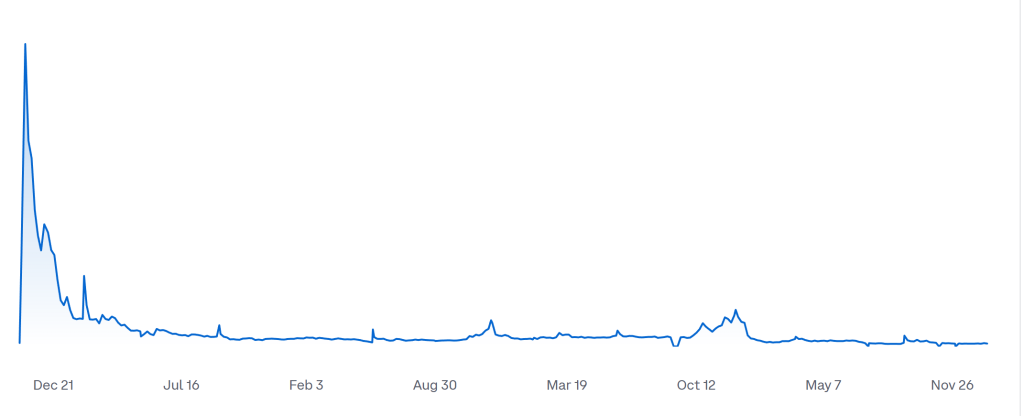
The Squid Game token, inspired by the popular Netflix series, exemplifies a pump-and-dump memecoin. Launched in late 2021, it experienced an explosive pump shortly after inception, reaching an all-time high of $0.2512 on November 18, 2021. This surge was fueled by media hype and FOMO (fear of missing out), but it was quickly followed by a devastating dump, allegedly due to a rug pull by developers.
The price crashed over 99.97% from its peak, hitting an all-time low of $0.000008961 in March 2025.Over the last year (as of January 2026), the chart shows ongoing volatility but no sustained recovery, with the token trading at around $0.000084. It has seen minor upticks—such as an 8.6% increase in the past 7 days and 18.2% over 30 days—but these are dwarfed by its historical decline. The 24-hour trading volume is a meager $1.87, and the fully diluted valuation stands at just $67,201.59, reflecting low market interest and liquidity. Trading is mostly on decentralized platforms like PancakeSwap, with no significant utility to support long-term holding.
This chart pattern—rapid ascent followed by a prolonged downtrend—highlights the risks of pure hype-driven memecoins, where early participants profit at the expense of others.
Case Study: Memelinked (MK) – Strength Through Utility
In contrast, Memelinked (MK) represents a new breed of meme-linked coins that combine viral appeal with tangible utility. Built on Ethereum, MK is part of a platform that blends meme culture with a decentralized social network, allowing users to connect, share content, trade tokens, and promote projects organically. Founded by Pablo Cro, the ecosystem emphasizes community building and exposure for real-world initiatives, bridging fun memes with functional tools like smart profiles, multi-format content sharing, and global networking features.
An upcoming network marketing app is set to expand this by enabling enhanced project promotion, affiliate-style networking, and incentivized community growth, further solidifying its utility in the crypto space.
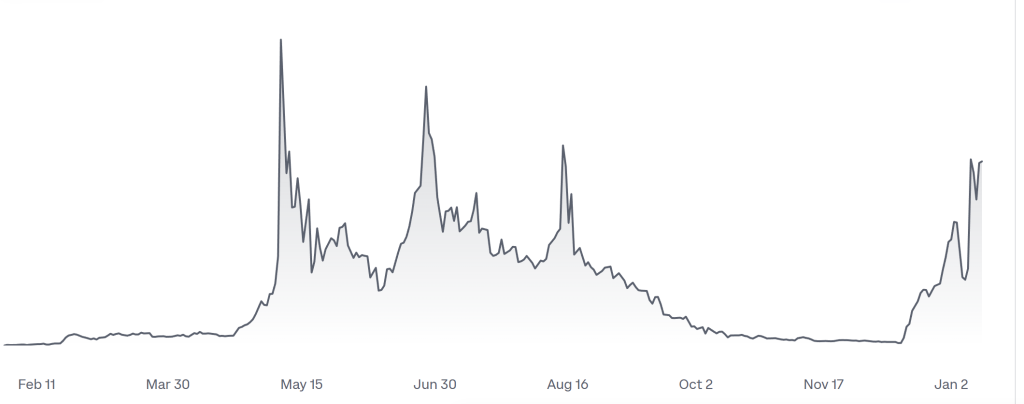
The price chart for MK over the last year demonstrates remarkable strength and resilience. Starting from an all-time low of $0.002359 in January 2025, it climbed to an all-time high of $0.3086 in May 2025. As of January 2026, MK trades at $0.1957, with a market cap of $9,676,262 and a 24-hour trading volume of $28,803. Recent performance is particularly strong: a 162.6% gain over the past 7 days and an astonishing 3448.2% increase in the last 30 days. While volatile, the chart shows upward trends supported by utility-driven adoption, rather than pure speculation, leading to more sustained highs and fewer catastrophic dumps.
Here’s a recent price chart for Memelinked
Key Comparisons: Charts, Risks, and Potential
| Aspect | Pump and Dump (e.g., SQUID) | Utility-Driven (e.g., MK) |
|---|---|---|
| Chart Pattern | Sharp pump followed by steep, irreversible dump; minimal recovery. | Volatile but upward-trending with strong rebounds; sustained growth periods. |
| Price Volatility | Extreme short-term spikes (e.g., from near zero to $0.25 in days), then 99%+ drops. | Significant gains (e.g., 3448% in 30 days) backed by ecosystem development. |
| Market Cap & Volume | Low and declining (FDV ~$67K, volume <$2). | Healthy and growing (~$9.7M cap, $28K volume). |
| Utility | None; pure meme hype. | Social networking platform, trading tools, upcoming network marketing app for project promotion. |
| Investor Risks | High chance of total loss due to rug pulls or fading hype. | Still risky but mitigated by real use cases and community engagement. |
| Long-Term Potential | Limited; often becomes worthless. | Higher, as utility attracts ongoing users and partnerships. |
The stark difference in charts underscores a fundamental divide: Pump-and-dump memecoins like SQUID offer quick thrills but inevitable pitfalls, while tokens like MK leverage memes as an entry point to build lasting value through utility. MK’s social network and planned app features position it for continued strength, potentially attracting more developers and users in the evolving crypto landscape.
Conclusion
Investors should approach memecoins with caution, prioritizing those with verifiable utility over hype alone. While pump-and-dump charts like SQUID’s serve as cautionary tales, stronger performers like MK illustrate how integrating real applications—such as social networking and marketing tools—can lead to more resilient price action.
Always conduct thorough research and consider market conditions before investing.