
In the fast-paced world of cryptocurrency and financial markets, many people are drawn to the excitement of short-term trading. The idea of buying and selling quickly to capture rapid price movements can sound appealing, especially when stories circulate about traders making large profits in a single day. However, the reality is that short-term trading can be stressful, unpredictable, and extremely difficult to do consistently.
For many investors, a long-term strategy is not only more practical—it is also a far more comfortable and sustainable way to build wealth.
The Stress of Constant Market Watching
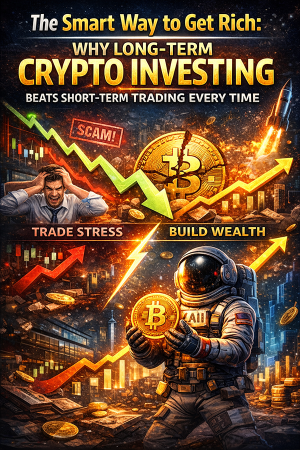
Short-term trading often requires constant attention to the market. Prices can move dramatically within minutes or hours, and traders must make rapid decisions under pressure. This means watching charts, analyzing technical indicators, monitoring news, and reacting quickly to market sentiment.
For most people, this level of intensity can become exhausting. The emotional rollercoaster of quick gains followed by sudden losses can lead to impulsive decisions, which often result in poor outcomes.
Long-term investors, on the other hand, don’t need to monitor the market every minute. By focusing on projects they believe in and holding their investments through market cycles, they can avoid much of the stress that comes with daily price fluctuations.
Markets Naturally Move in Cycles
Financial markets—including cryptocurrency—naturally move through cycles of growth, correction, and consolidation. Short-term traders try to predict these movements precisely, but even experienced professionals struggle to time the market perfectly.
Long-term investors take a different approach. Instead of trying to capture every small price movement, they focus on the overall growth potential of strong projects over time. When a project continues developing, expanding its community, and delivering on its roadmap, its value can increase significantly over the long run.
History has shown that many of the largest gains in crypto have come from investors who simply held quality assets through market ups and downs.
Reducing Emotional Decisions
One of the biggest challenges in trading is controlling emotions. Fear and greed often drive short-term decisions. When prices fall quickly, traders may panic and sell at a loss. When prices rise rapidly, they may buy at the top out of fear of missing out.
Long-term investing helps remove much of this emotional pressure. By focusing on the long-term vision of a project rather than daily price swings, investors can make more rational decisions based on fundamentals rather than market noise.
This mindset can lead to greater confidence and a calmer investment experience.
The Power of Compounding Growth
Another advantage of long-term investing is the power of compounding. As projects grow, expand their ecosystems, and attract more users, their value can increase steadily over time. Investors who remain patient and allow their investments to grow may benefit from the cumulative effects of that growth.
In many cases, the largest gains occur over extended periods rather than short bursts of trading activity.
Time Is on the Side of Long-Term Investors
Perhaps the greatest advantage of long-term investing is that time becomes an ally rather than an enemy. Instead of constantly trying to outsmart the market, long-term investors focus on identifying strong projects, building positions, and allowing innovation and adoption to drive value over time.
This approach allows investors to participate in the growth of transformative technologies without the pressure of daily trading.
A More Comfortable Path to Wealth
While short-term trading will always attract those who enjoy high-risk, high-intensity strategies, many successful investors find that long-term investing offers a more balanced and comfortable approach.
By researching projects carefully, investing in strong teams and real utility, and maintaining patience through market cycles, investors can position themselves to benefit from the long-term expansion of the digital economy.
In the end, building wealth is rarely about chasing every opportunity—it’s about recognizing the right opportunities and giving them time to grow. 🚀









Leave a Reply